• 2 min de lectura
• 2 min de lectura

Latin America is at a turning point where its promises of economic development depend, more than ever, on its ability to guarantee internal peace. Historically, the region is a logistical platform, but there is a growing problem: the security crisis and transnational organized crime.
A few days ago, President Kast in Paraguay, within the framework of the Mercosur meeting, a group of countries that has trade exchanges with Chile amounting to USD 22.934 billion, made a call in this regard. The head of state pointed out that physical connectivity efforts will be fruitless if the infrastructure is not protected by the nations that benefit from it.
At the center of this discussion is the ambitious Bioceanic Corridor, an engineering work that includes a road network of approximately 2,400 kilometers designed to connect the Atlantic Ocean with the Pacific (where countries have committed to works such as port facilities and accesses, loading and unloading areas, highway improvements, bridge construction, and other initiatives).
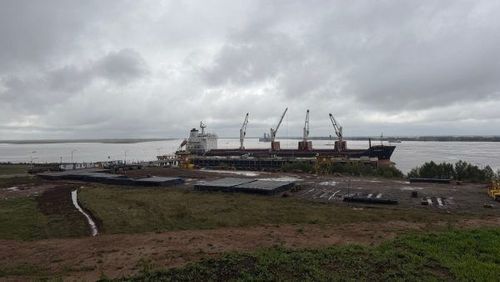
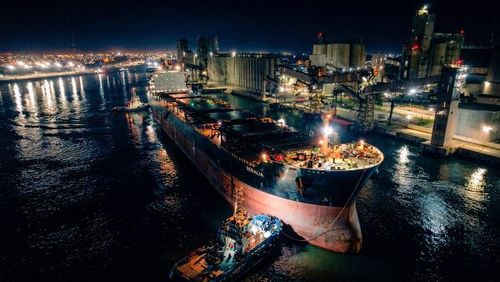
This megaproject, which will connect central-western Brazil and the northern provinces of Argentina, has its outlet at the maritime terminals in northern Chile, specifically in the ports of Antofagasta, Mejillones, Tocopilla, and Iquique.
For the economy, the corridor promises to boost the flow of goods, offering a much faster and more competitive land and sea route for exporting and importing products to and from the Asia-Pacific and European markets.
However, this corridor brings challenges. One of the main concerns lies in the border, ports, and customs. A space of this magnitude becomes a high-value target for criminal organizations.
The Chilean government's call to neighboring countries was to strengthen security at the points of exit and entry of goods. International cooperation with European Union powers, such as Germany, responds to the same logic: that the Pacific ports implement concrete measures.
As we know, the Bioceanic Corridor represents a historic opportunity for the integration of South America. However, the success of this trade route will depend on the involved countries assuming that security and economic development go hand in hand. Stability is urgently needed in the region to compete in the global arena.