• 4 min de lectura
• 4 min de lectura
NOAA has officially declared the arrival of El Niño conditions, confirming the climate pattern that prompted the Panama Canal Authority to announce its first vessel draft restriction of 2026 earlier this month.
In its latest ENSO Diagnostic Discussion released Thursday, NOAA's Climate Prediction Center said El Niño conditions developed over the past month and are expected to strengthen through the Northern Hemisphere winter. Forecasters now assign a 63% probability that the event will become a "very strong" El Niño during the November-January period, potentially ranking among the strongest events observed since records began in 1950.
"El Niño conditions are present and expected to strengthen into the Northern Hemisphere winter 2026-27," the agency said.
The forecast marks a significant shift from NOAA's outlook just weeks ago, when forecasters were still projecting the likely emergence of El Niño later this year. NOAA has now upgraded to an El Niño Advisory, citing above-average sea surface temperatures across the central and eastern equatorial Pacific Ocean, elevated ocean heat content, and expanding atmospheric patterns consistent with a strengthening event.
For the maritime industry, the development is being closely watched because El Niño has historically been associated with reduced rainfall across Central America, including the Panama Canal watershed.
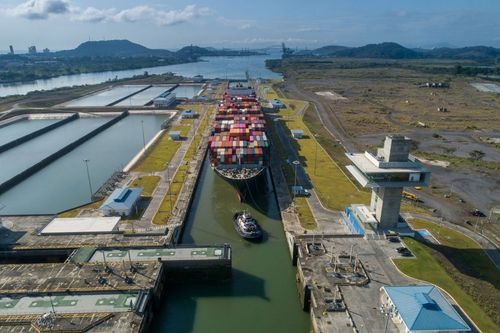
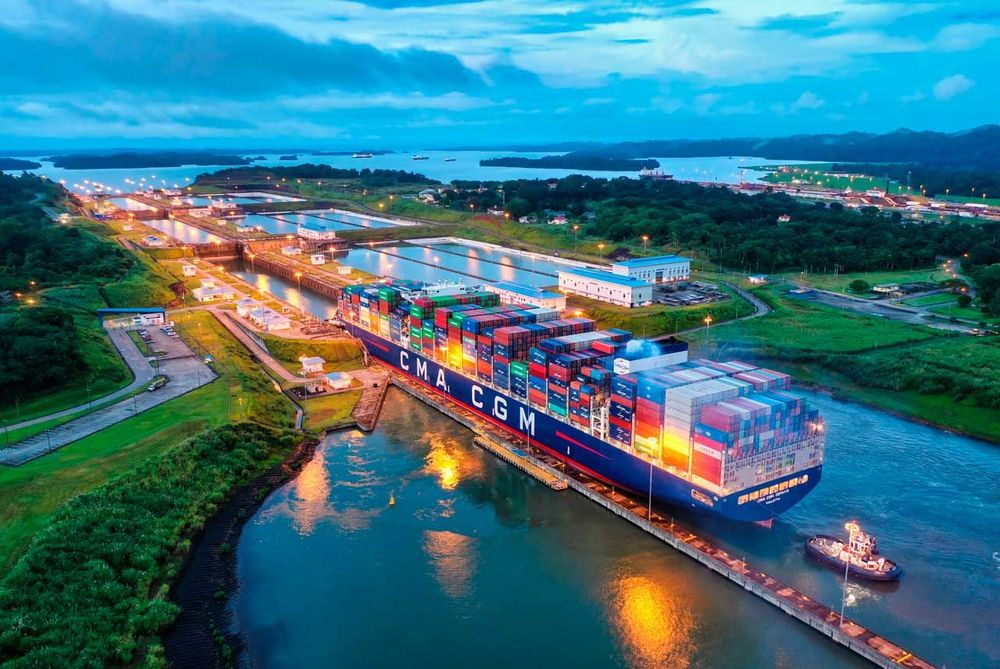
The Panama Canal Authority (ACP) announced earlier this month that it would reduce the maximum authorized draft for Neopanamax vessels from 50 feet to 49.5 feet tropical fresh water beginning July 3. Canal officials cited concerns about the potential development of El Niño and uncertainty surrounding future rainfall patterns.
The draft adjustment represents the first operational restriction announced by the canal this year, though it remains far less severe than the restrictions imposed during the historic 2023-24 drought, when reduced water levels forced transit limitations and triggered congestion that disrupted global shipping networks.
The ACP has spent months implementing water conservation measures designed to prevent a repeat of that crisis. Those efforts include expanded use of water-saving basins at the Neopanamax locks, simultaneous lockages for smaller vessels, deployment of interior lock gates to reduce water consumption, and the suspension of hydroelectric generation at Gatun to prioritize water storage.
Canal officials have also emphasized that current water conditions remain favorable. In May, the ACP said Gatun Lake levels had been maintained at historically high levels and that the waterway continued to support approximately 38 daily transits, near the upper end of its operational capacity.
Canal Administrator Ricaurte Vásquez Morales said earlier this month that planners were reviewing draft rules months earlier than usual in anticipation of a possible El Niño event, allowing the authority to take gradual measures rather than impose the more severe restrictions seen during the last drought cycle.
The latest NOAA forecast strengthens the rationale behind those preparations.
According to NOAA, anomalously high ocean heat content and expanding westerly wind anomalies across the equatorial Pacific are expected to support further strengthening of El Niño through late 2026. While the agency cautioned that even very strong El Niño events do not produce identical impacts everywhere, stronger events tend to increase the likelihood of expected regional weather patterns.
The forecast comes as the Panama Canal is handling some of its strongest traffic levels since emerging from the previous drought. According to BIMCO, vessel transits through the canal have increased 8% year-over-year in 2026 to an average of 38 vessels per day, driven largely by tanker traffic. Over the five weeks through mid-May, transits rose 16% from a year earlier as disruptions in other major shipping corridors boosted demand for cargo movements through Panama.
With El Niño now officially underway and forecast to intensify, attention will increasingly turn to whether the canal's extensive water-management measures can maintain current transit levels if rainfall patterns deteriorate later this year.
NOAA's next ENSO Diagnostic Discussion is scheduled for July 9.
Fuente: GCAPTAIN_NEWS