• 2 min de lectura
• 2 min de lectura
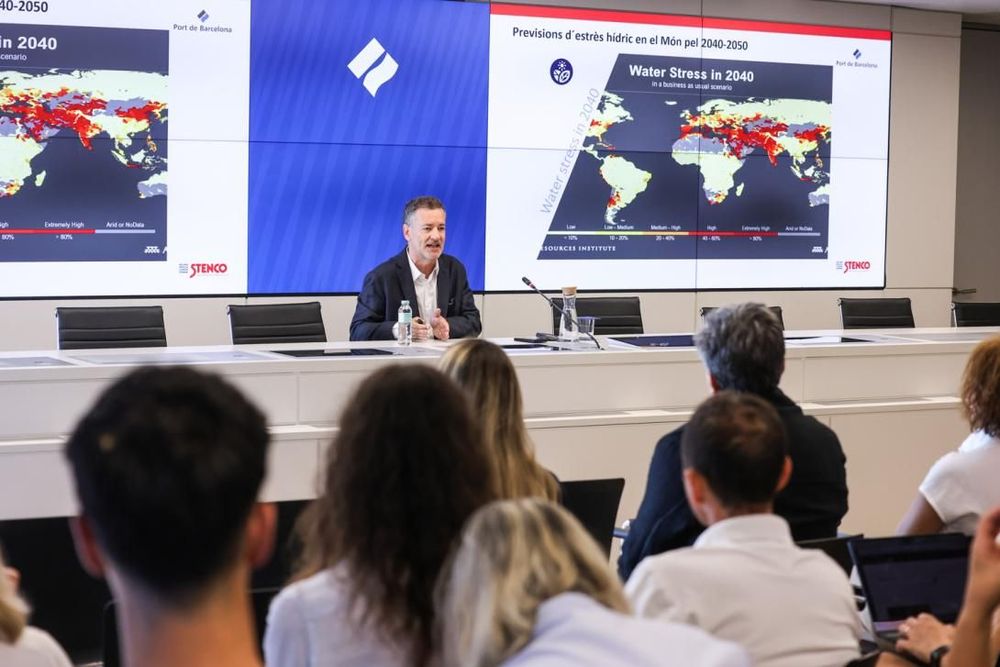
The Port of Barcelona today hosted the "Utilization of Reclaimed Water" conference, dedicated to analyzing how water can be reused in environments like the Port. The conference, organized by the Environmental Working Group of the Barcelona Port Community, brought together officials from the involved administrations, such as the Catalan Water Agency, the Public Health Agencies of Barcelona and Catalonia, and the Barcelona Metropolitan Area; as well as companies within the Port that are carrying out pioneering greywater reuse projects.
The conference started from the understanding that climate change is making water an increasingly scarce and critical resource, necessitating its saving and reuse. It was explained that, in the metropolitan area, the design of a new reclaimed water distribution network is being finalized. This network will come from wastewater treatment plants and will be designated for irrigation, cleaning, cooling, and other industrial uses. The proximity of the Llobregat Wastewater Treatment Plant (EDAR) to the Port of Barcelona and the already constructed collector on Calle A in the Zona Franca suggests that the port area will be one of the first areas where this new infrastructure can be extended.
The reclaimed water conference was divided into two blocks. The first block focused on explaining the quality that regenerated residual or greywater must achieve to be reused, its health risks and how to prevent them, the metropolitan plan to develop the future reclaimed water network, and the drought regulations that will increasingly limit water-intensive activities.
In the second block, two examples of greywater reuse from showers for non-potable uses were presented, currently being implemented at Hotel W and Club Natació Atlètic Barceloneta and MB'92. The first, operational for years, and the second, under construction, are benchmark projects in Catalonia and Spain that demonstrate how greywater in hotels and sports facilities, once properly treated, can be reused for non-potable purposes. The second project stands out for connecting a sports facility with a shipyard, demonstrating that it is possible for companies and administrations from different sectors to work together with the aim of reducing water consumption.