• 3 min de lectura
• 3 min de lectura
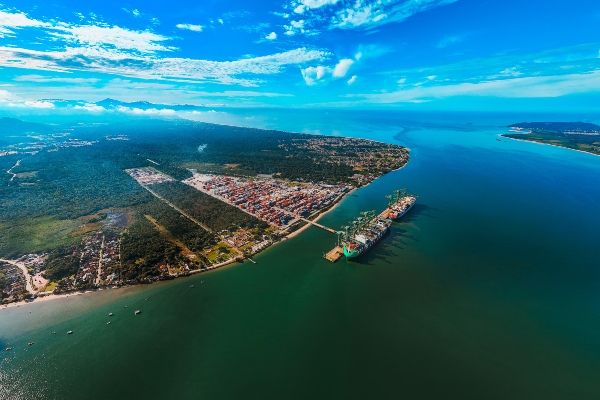
For the fifth consecutive year, Porto Itapoá received the Gold Seal from the Brazilian GHG (Greenhouse Gas) Protocol Program, an acknowledgment granted to organizations that prepare and publish complete greenhouse gas (GHG) emissions inventories according to the program's methodology.
The recognition refers to the 2026 cycle, based on the 2025 emissions inventory, and includes independent verification.
One of the main indicators of the inventory was an 11.7% reduction in carbon intensity compared to 2024, decreasing from 13.22 to 11.67 tCO2e per TEU handled. This indicator measures the amount of emissions generated per unit of cargo handled and demonstrates that, proportionally to the growth of operations, the terminal reduced its emissions intensity.
The CEO of Porto Itapoá, Ricardo Arten, highlighted the emissions inventory as a fundamental management tool. "By accurately measuring where our emissions are generated, we can guide investments, define priorities, and monitor the evolution of results year after year. Obtaining the Gold Seal for the fifth consecutive year confirms the consistency of this work," he stated.
During this period, the terminal recorded total emissions of 23,217 tons of carbon dioxide equivalent (tCO2e), considering the three scopes defined by the GHG Protocol. Scope 1, which includes direct emissions from operations, such as fuel consumption in equipment and vehicles, accounted for 14,462 tCO2e (62% of the total). Scope 2, which refers to indirect emissions associated with electricity consumption, totaled 3,461 tCO2e (15%). Scope 3, which covers other indirect emissions from the value chain, such as transportation carried out by third parties, travel, and waste, totaled 5,294 tCO2e (23%).
Among the initiatives that contributed to this result are the expansion of fleet and equipment electrification, the use of hybrid gantry cranes, continuous energy management actions, and the maintenance of the emissions inventory according to the Greenhouse Gas Protocol methodology. Currently, the terminal operates 27 electric trucks, the largest fleet in Brazil, in addition to other electric equipment.
According to Arten, the results demonstrate that it is possible to expand operational capacity while reducing environmental impact. "Porto Itapoá has experienced a 75.3% growth in container traffic since 2021. The inventory shows that we are managing to decouple operational growth from emissions growth through investments in electrification, energy efficiency, and new technologies. This is the path towards an increasingly sustainable operation," he emphasized.
The Brazilian GHG Protocol Program is the leading initiative in the country for the accounting and publication of corporate greenhouse gas inventories. The Gold Seal is awarded to organizations that prepare complete and verified inventories in accordance with the program's methodology.