• 3 min de lectura
• 3 min de lectura
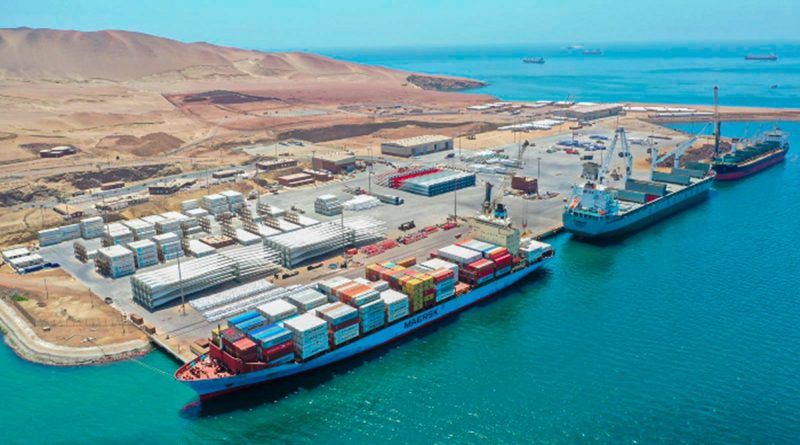
The movement of cargo in Peru's public-use port terminals reached 5.8 million metric tons in April 2026, representing a growth of 20.1% compared to the same month of the previous year, reported the Ministry of Transport and Communications (MTC), through figures from the National Port Authority (APN).
This result reflects greater dynamism in foreign trade and logistics activity, explained by the favorable performance of rolling cargo, which registered the largest variation among the types of cargo mobilized, with an increase of 42.9% compared to the same month of the previous year, reaching 43,282 metric tons.
For its part, solid bulk showed an increase of 40.5%, totaling 1,087,946 metric tons and a share of 18.8% of the total volume mobilized. Likewise, mineral solid bulk registered an increase of 27.6%, mobilizing 967,816 metric tons, representing 16.7% of the total. The observed growth in these types of cargo contributed to the increase in the total volume mobilized.
Similarly, containerized cargo consolidated itself as the main type of cargo mobilized, concentrating 52.5% of the total and reaching 3,047,855 metric tons, which represented a growth of 17.3% compared to the same month of the previous year.
Fractionated cargo accounted for 7.8% of the total volume mobilized, totaling 454,616 metric tons and an increase of 9.6% compared to the same period of the previous year. The dynamism observed in both types of cargo helped mitigate the drop recorded in liquid bulk, which decreased by 21.0%, totaling 200,639 metric tons.
"The performance of the port system reflects the sustained reactivation of trade and the efficiency of investments in logistics infrastructure. From the MTC, we continue to promote conditions that strengthen the country's competitiveness and facilitate the flow of goods," said the Minister of Transport and Communications, Aldo Prieto Barrera.
In operational terms, unloading represented 48% of the total cargo movement, followed by loading with 36.3% and transshipment with 12.9%. Likewise, other types of operations concentrated the remaining 2.8%. This distribution confirms the strategic role of Peruvian ports as important regional logistics hubs.
At the terminal level, the largest cargo movement in April was recorded at the South Zone Container Terminal of Callao, operated by DP World, with 1.8 million metric tons. This was followed by the North Multipurpose Terminal of Callao, concessioned to APM Terminals, with 1.6 million metric tons; the Matarani Port Terminal (Tisur), with 722,514 tons; the Chancay Multipurpose Port Terminal (Cosco), with 479,490 tons; and the General San Martín Port Terminal in Paracas (Consorcio Paracas), with 323,783 metric tons.
Source: Portal Portuario