• 2 min de lectura
• 2 min de lectura
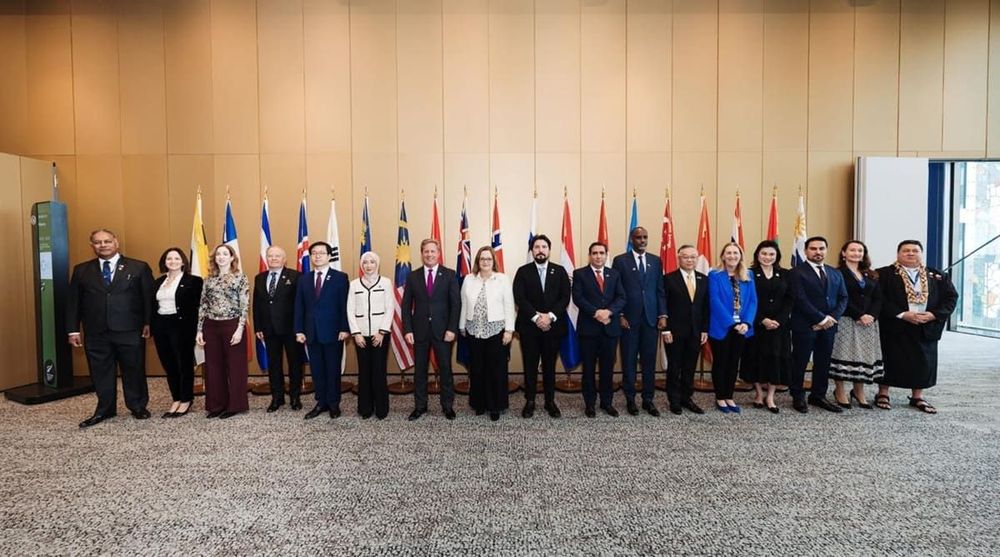
Peru formalized its incorporation into the Future of Investment and Trade Alliance (FIT-P) during the initiative's Second Ministerial Meeting, held in Auckland, New Zealand, taking a new step in its process of international economic integration.
Peru's incorporation will allow for expanded cooperation with other participating economies and contribute to the initiative's work on trade and investment issues of common interest.
During the meeting, ministers and trade representatives adopted instruments aimed at strengthening economic resilience, accelerating the digitization of trade, and deepening cooperation on non-tariff barriers. They also agreed to continue developing a work agenda on subsidies, transparency, and predictability of the rules-based trading system, as well as supply chain resilience.
Peru endorsed the Ministerial Declaration on Facilitating the Digitization of Trade Processes and Documents, aimed at promoting paperless trade, the use of international standards, and the interoperability of digital systems, in order to facilitate more agile, simple, and secure trade operations.
Similarly, Peru joined the Plurilateral Arrangement on Cooperation in Non-Tariff Barriers, which establishes a framework for the exchange of information, experiences, and best practices, as well as for cooperation among its participants in identifying and addressing measures that restrict or affect trade.
FIT-P was launched in September 2025 by 14 founding members: Brunei Darussalam, Chile, Costa Rica, Iceland, Liechtenstein, Morocco, New Zealand, Norway, Panama, Rwanda, Singapore, Switzerland, United Arab Emirates, and Uruguay. During its First Ministerial Meeting, held in November 2025, Malaysia and Paraguay joined. With the incorporation of Peru, the Republic of Korea, and Thailand during the Second Ministerial Meeting, FIT-P now has 19 members.
FIT-P is a flexible platform for cooperation in trade and investment that brings together small and medium-sized economies committed to open, fair, and rules-based trade. Through this initiative, its members promote the exchange of experiences, the development of joint initiatives, and practical cooperation on emerging issues on the international trade agenda.
Its main areas of work include economic and supply chain resilience, trade and investment facilitation, digitization of trade processes, and cooperation on non-tariff barriers.