• 4 min de lectura
• 4 min de lectura
The boost in road, port, airport infrastructure and logistics services has been one of the main supports for the growth of Peruvian exports, which multiplied by 13 between 2001 and 2025, reported the executive president of ProInversión, Luis Del Carpio.
During his participation in the X Logistics Forum: "Logistics for Competitiveness: Infrastructure, Integration and Governance for Foreign Trade", organized by the Association of Exporters (ADEX), Del Carpio pointed out that the country went from exporting 7.026 billion dollars in 2001 to 93.993 billion dollars in 2025, a result that reflects the effort of the private sector, trade openness, macroeconomic stability and the promotion of long-term investments.
The head of ProInversión maintained that this progress responds to sustained strategic decisions over several decades, such as the signing of trade agreements, the development of infrastructure through Public-Private Partnerships (PPPs) and confidence in the private sector's ability to execute high-impact projects. "30 years ago, some only saw deserts or small ports; today we see logistics corridors, modern ports and opportunities to integrate Peru with the world," he affirmed.
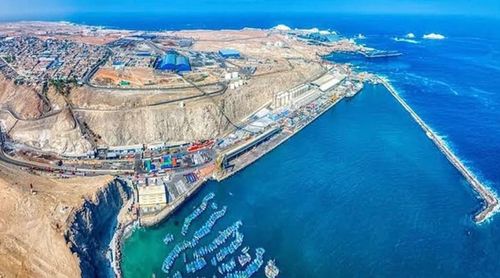
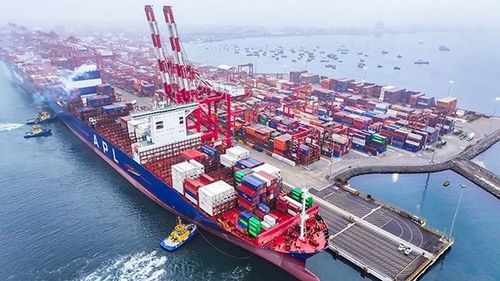
Del Carpio specified that ports concessioned under the PPP modality have played a fundamental role in foreign trade. Currently, the country has nine concessioned port terminals, with 2.376 billion dollars invested and 1.879 billion dollars yet to be executed. In 2025, these ports mobilized 69.4 million metric tons of cargo, a 131% increase compared to 2010, and 94% of said cargo passed through terminals concessioned through PPPs.
He also highlighted that roads, airports, electricity transmission lines, sanitation systems, irrigation projects and logistics services promoted with private participation have also contributed to export growth. He added that infrastructure not only allows goods to be moved more efficiently, but also connects territories, reduces costs, improves services and generates employment in the regions.
"Investments in ports are an excellent indicator of prosperity. When an investor decides to bet on port infrastructure, they are looking at the future and seeing opportunities that the country must convert into development," highlighted the head of the agency.
During his presentation, Del Carpio stressed that Peru has the conditions to consolidate itself as a regional logistics platform; however, this requires a long-term vision, governance, articulation between sectors and efficient execution of projects. In this regard, he indicated that ProInversión is promoting the PPP 5.0 model, oriented towards more agile management, with fiscal and technical sustainability, a portfolio approach, territorial articulation, digitalization and interoperability.
The executive president of ProInversión reported that the agency is promoting a portfolio of 91 PPP and Asset Projects, grouped into six logistics axes and seven addenda, for more than 41 billion dollars. This portfolio seeks to strengthen national connectivity, integrate productive areas with ports, airports and markets, and improve the competitiveness of foreign trade.
The six prioritized logistics axes are the northern coastal axis, on the Paita–Salaverry–Chancay route; the northern transversal axis, Paita–Yurimaguas–Santa Rosa; the central coastal axis, Chancay–Callao–Pisco; the central transversal axis, Callao/Chancay–Pucallpa; the southern coastal axis, Pisco–Matarani–Tacna; and the southern transversal axis, Matarani/San Juan de Marcona/Ilo–Iñapari.
Del Carpio highlighted that the Chancay–Callao–Pisco axis constitutes one of the corridors with the greatest potential in Latin America, due to its capacity to articulate the new port of Chancay, the port of Callao, the Jorge Chávez International Airport, the Ring Road, Road Network 5, sanitation projects and future digital solutions such as the Port Community System.
He also highlighted the potential of the southern axis, which articulates Matarani, San Juan de Marcona, Ilo and Iñapari, and which can become a strategic platform to connect Peru with Brazil and Bolivia. Along this route, projects such as the Puno Dry Port, Majes Siguas II Stage, road corridors, airports, natural gas massification, electrical projects, Ilo desalination plant and Cusco WWTP are being promoted.
Finally, Del Carpio remarked that the country needs to take a new leap in infrastructure to convert its solid macroeconomic figures into concrete well-being for the population. "Good macroeconomic figures are the foundation; now we have to build the house on those foundations. That house is quality infrastructure, efficient services and opportunities for all territories," he said.
The X ADEX Logistics Forum was attended by the Minister of Foreign Trade and Tourism, Berthin Enrique Gómez; the president of ADEX, César Tello; representatives of the public sector, business associations, specialists and actors linked to foreign trade.