• 3 min de lectura
• 3 min de lectura
The pressure to reduce emissions and accelerate operational efficiency has begun to modify the type of investments within Mexican ports. In Veracruz, Hutchison Ports ICAVE decided to advance along this path with an investment exceeding 62.8 million pesos (3.6 million dollars) aimed at the electrification and automation of part of its internal operations, a strategy that also reflects how port operators seek to respond to greater logistical demands without losing competitiveness.
The terminal incorporated six new Autonomous Trucks for the horizontal movement of containers within the port facility. These units join six previously operational units, bringing the autonomous fleet to 12 driverless vehicles. The investment exclusively for this expansion amounted to approximately 32.5 million pesos (1.9 million dollars).
Beyond technological incorporation, the move also demonstrates the terminal's commitment to automating processes considered critical within port operations, particularly those related to internal container mobility, where operational continuity, maneuvering precision, and incident reduction are gaining importance compared to traditional models intensive in diesel equipment and operational labor.
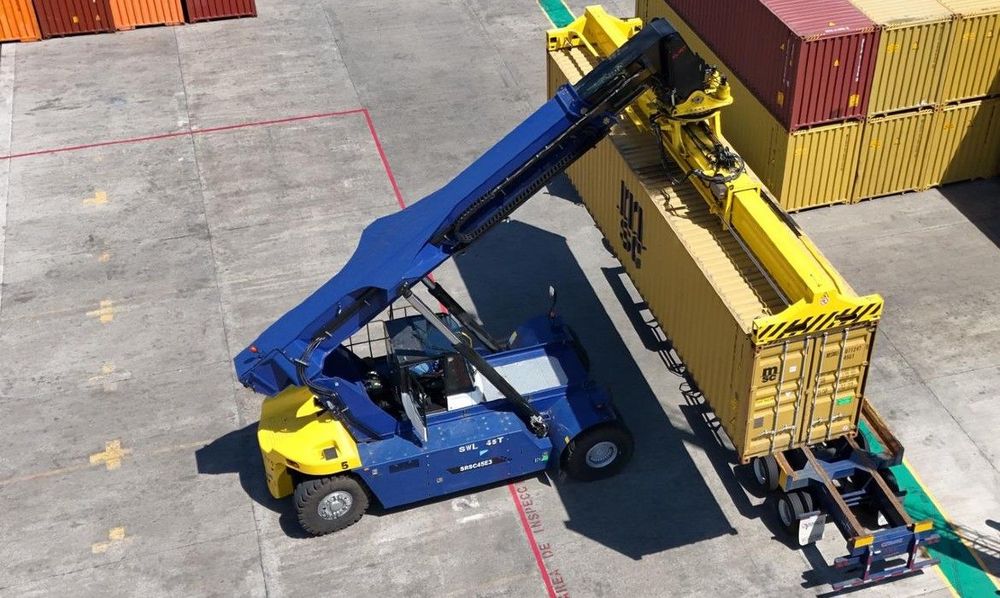
The strategy also included the acquisition of three electric Reach Stackers for handling full containers and two electric tractor-trailers, machinery intended to replace conventional diesel equipment. In the case of the Reach Stackers, the investment exceeded 25 million pesos (1.4 million dollars), while the tractor-trailers represented approximately 5.3 million pesos (290 thousand dollars).
The incorporation of this equipment comes at a time when ports face dual pressure: increasing capacity to handle greater foreign trade flows and, at the same time, responding to increasingly strict environmental commitments driven by both global clients and international logistics chains.
"The incorporation of electric and autonomous equipment is part of a comprehensive transformation of our operation. We not only seek greater efficiency but also aim to move towards a cleaner, more innovative, and prepared port model for the logistical and environmental challenges of the coming decades," said Javier Rodríguez Miranda, General Manager of Hutchison Ports ICAVE, quoted in a press release.
The executive announced that the new Autonomous Trucks will begin formal operations in June 2026 and that the terminal plans to integrate them later into railway operations, a component that could expand the scope of automation within the Port of Veracruz and strengthen the terminal's intermodal connection.
The company estimates that this technological transition will allow for an approximately 58% reduction in CO₂ emissions compared to the use of conventional diesel equipment. According to the terminal's operational calculations, six diesel tractor-trailers generate around 58.5 tons of CO₂, while six 100% electric Autonomous Trucks produce approximately 24.3 tons.
This commitment is part of Hutchison Ports' global NET Zero strategy, which aims to reduce absolute Greenhouse Gas (GHG) emissions (Scope 1 and 2) by 54.6% by 2033, using 2021 levels as a reference. The group has also set a goal of achieving net-zero emissions across its entire value chain by 2050.
The operational context is also significant. According to figures from the National Port System Administration (Asipona) Veracruz, the port mobilized approximately 1.3 million TEU (20-foot containers) and over 30 million tons of cargo in 2025, consolidating itself as one of the most relevant logistical hubs in the country and the main port in the Gulf of Mexico for container movement.
In this environment, automation and electrification are beginning to emerge not only as an environmental commitment but also as a tool to sustain productivity, operational availability, and responsiveness in the face of increasingly demanding and specialized logistics chains.