• 2 min de lectura
• 2 min de lectura
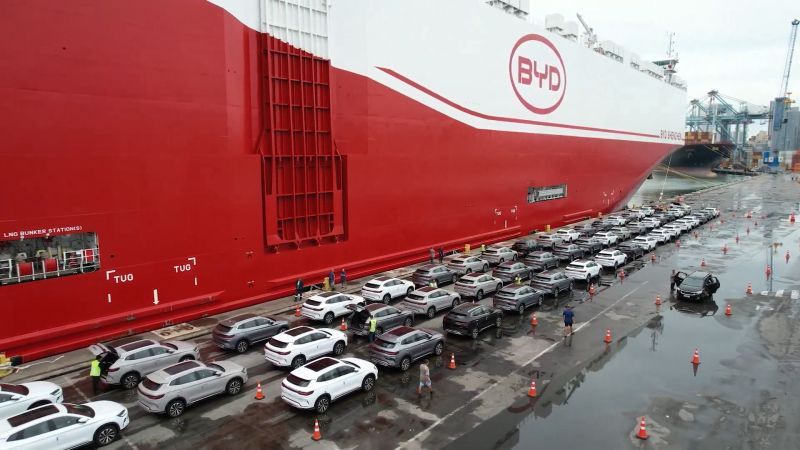
The Port of Itajaí welcomed the vessel BYD Changsha, carrying 7,216 vehicles from the Chinese automaker BYD. The operation reinforces the consolidation of this pier as one of the main gateways for Ro-Ro cargo movement in Brazil.
With over seven thousand units transported in a single trip, this call represents the largest automotive operation carried out at the terminal in 2026.
Before the arrival of the BYD Changsha, the Port of Itajaí had already accounted for 8,280 vehicles moved in roll-on/roll-off (Ro-Ro) operations this year. With the new call, the accumulated total will reach 15,496 vehicles moved in the first half of 2026 alone.
The history of operations includes calls from the Victoria Highway, with 628 vehicles; the Dover Highway, with 457 vehicles; the Good Wood, with 430 units; the Victoria Highway, with 674 vehicles; the Dover Highway, with 739 vehicles; the Grande Shanghai, with 4,585 vehicles; and another call from the Victoria Highway, with 767 vehicles.
The operation will be carried out by JBS Terminais and mobilizes an extensive logistical structure to ensure agility, safety, and efficiency in the unloading of vehicles.
For the superintendent of the Port of Itajaí, Artur Antunes Pereira, the new call confirms the growth of automotive operations and the strengthening of the public port in the national scenario.
"Receiving the BYD Changsha with more than 7.2 thousand vehicles is a milestone for the Port of Itajaí. This operation demonstrates the market's confidence in our structure, in the efficiency of the terminal, and in the work being done to expand the capacity and competitiveness of the public port. We continue to advance, generating jobs, boosting the economy, and consolidating Itajaí as a strategic gateway for automotive logistics in Brazil," highlighted the superintendent.
The arrival of the BYD Changsha expands the Port of Itajaí's participation in Brazilian automotive logistics and reinforces the expansion process of port activities, with an increase in cargo movement, job creation, and strengthening of the regional economy.
Source: Portal Portuario