• 3 min de lectura
• 3 min de lectura
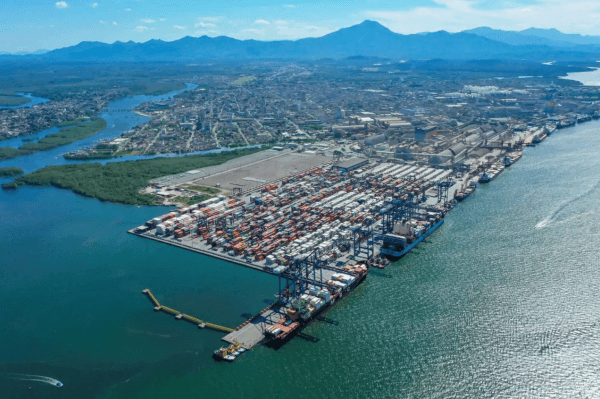
Beef shipments destined for North America, through TCP -the company that manages the Paranaguá Container Terminal-, increased by 19% with 35,700 tons in the first quarter of 2026, while wood exports to North America grew by 12% with 110,000 tons.
To the United States alone, 31,700 tons of meat were dispatched, representing a 26% increase. This performance continued the terminal's upward trend, which in 2025 reached a historical record after shipping 1.034 million tons of the product, a 53% improvement compared to 2024.
Wood exports maintained an absolute prominence in the terminal's shipments to North America, totaling 110,000 tons in the first quarter of 2026, a 12% increase.
According to TCP, one of the most relevant changes this quarter was the modification in the profile of the destinations of exported cargo. Mexico became the main recipient market for dispatches from the facility to North America with 130.4 thousand tons moved, ahead of the United States, which received 93 thousand tons.
The Mexican advance was driven primarily by wood, which accounted for 55,000 tons exported to the country - a 33% growth compared to the same period in 2025. Paper and chicken meat also gained ground with 35,700 tons and 26,700 tons shipped, respectively.
The United States, for its part, remained the main origin of TCP's imports in the region, sending 30,600 tons to the terminal during the quarter. Among the main products unloaded were polyethylene, used by the processing industry, and sulfur, which is an input for the fertilizer production chain.
Meanwhile, Canada registered one of the fastest growths, despite the volume still being low compared to trade with the United States and Mexico: exports practically doubled, going from 4,200 to 8,100 tons in the quarter. The highlight was the paper segment, whose shipped volume quintupled, reaching 3,600 tons. Wood, pork, and beef also advanced in operations with the country.
"The North American market has a very solid consumer demand, especially in the wood and animal protein segments, which Brazil supplies with excellence. What changed with the new scenario was the need for exporters to act with greater flexibility, redistributing volumes and quickly adjusting their commercial strategy as the international landscape changes," said Fabio Mattos, TCP's Commercial Manager.
The company highlighted that to sustain this commercial flow, TCP has six regular maritime services connecting Paranaguá with the main ports on the Atlantic coast of the United States and Mexico, in addition to having a route that connects the terminal with the Mexican Pacific coast.
"The high number of maritime services, storage infrastructure, and logistical integration make a difference so that cargo can be shipped quickly and remain competitive even with changes in the international landscape," Mattos emphasized.
Source: portalportuario